Track sales from influencer promo codes: close the gap between code and payout
How to track influencer promo codes step by step: one code per creator, order matching, UTM backup and the attribution gap codes miss, with a ROAS example.
Almost every influencer marketing guide tells you to track sales from influencer promo codes by assigning each creator a unique code, then matching orders back. The advice is correct. The execution has about six gaps that most brands never close. Between creating a code in Shopify and knowing that a specific order came from a specific creator's content, there is an attribution chain. Most brands build the first few links and fill the rest with manual spreadsheet work.
How to track influencer promo codes, step by step
- Create one unique discount code per creator in your ecommerce platform, tied to a discount rule (for example, the creator’s name plus the discount).
- Record the code-to-creator mapping in one place before the code goes live, together with that creator’s rate and payout terms.
- Give each creator a UTM-tagged link as well as the code, so you can see sales from their content where the code was never typed.
- Put the code, the attribution window and a one-order-one-creator rule in the creator’s contract.
- Each week, export orders filtered by discount code, match every code to its creator, and calculate the payout.
- Compare code orders with link conversions to size the attribution gap, watch coupon sites for leaked codes, and rotate any code that leaks.
The steps are simple. The sections below cover where each one breaks, and what a code-only export hides.
How to track sales from influencer promo codes, link by link
The chain starts in your ecommerce platform, where you create a discount code tied to a discount rule. The code is a string of text. Nothing about it identifies the creator.
Next, you map that code to a creator. This mapping connects a checkout event to a specific person later. Most brands keep it in a spreadsheet. Some use a campaign management tool. A few keep it in their heads, which is why codes get lost.
The creator posts content and shares the code in the caption or video description. A customer sees the content, notes the code, and visits your store. At checkout, the customer types the code. Your platform applies the discount and logs the code on the order record.
Then comes the step most guides skip: you export your orders, filter by discount code, match each code to a creator, and calculate the payout. Flat fee, commission percentage, or bonus per sale.
The first three steps take minutes. The last one is where brands spend hours every week in a spreadsheet, reconciling codes to creators and computing payouts. With five creators, this is tedious. With twenty across three campaigns, the spreadsheet becomes a liability.
Where tracking influencer promo code sales breaks down
The chain has four common failure points. Each one quietly inflates or deflates the revenue you attribute to a creator, and most brands never see it happening.
- Coupon sites scrape codes from social and list them publicly. A code meant for one creator's audience starts driving bargain hunters who never saw the content, so you pay commission on sales the creator did not influence. Polar Analytics notes codes propagate to aggregators and browser extensions within days of going public.
- Creators share codes in group chats with friends and other creators. Two people in the same campaign end up promoting the same code. Revenue piles onto one creator's record, and the other creator goes unpaid.
- The customer who sees the video, goes to your store, and buys without entering the code is the biggest gap. She forgot it, or never realized there was a discount. The sale happened because of the creator's content, but code tracking cannot see it.
- A code redeemed on a session that arrived from paid search is coupon extension leakage, not creator influence. Polar Analytics recommends routing those redemptions to the paid channel and leaving a note, because raw Shopify exports cannot tell them apart from real ones.
You can measure this gap by running UTM link tracking alongside your promo codes. If a creator's link drives 1,000 clicks and 30 conversions, but only 12 orders use the code, the code captured 40% of the sales. The math: 12 divided by 30 equals 0.40, so 60% of the revenue from that creator's content goes unattributed.
Three tracking methods capture different slices of the truth
Promo codes are one of three common tracking methods. Each captures a different slice of the attribution picture, and each misses something the others catch.
| Method | What it captures | What it misses | Setup |
|---|---|---|---|
| Promo codes | Orders where the code was entered at checkout | Customers who saw the content but bought without the code | Create codes in your ecommerce platform, map each to a creator |
| UTM links | Clicks and sessions from the tagged URL | Conversions unless you add a separate pixel | Build tagged URLs, add a pixel to your checkout page |
| Affiliate or pixel tracking | Clicks, conversions, and revenue from tracked links | Sales where the customer saw the content but used a different path | Integrate an affiliate platform, issue links, configure conversion events |
What one creator's promo code earned
Take a micro-influencer with 45,000 followers. She posts two TikToks promoting a skincare brand. Her code is GLOW15 (15% off). Over 30 days, 42 orders use the code.
Here is the calculation:
- Average order value: $54
- Total revenue from code: 42 x $54 = $2,268
- Discount cost (15% of revenue): $2,268 x 0.15 = $340.20
- Creator fee (flat rate, 2 videos): $400
- Total cost: $340.20 + $400 = $740.20
- ROAS from code-attributed sales: $2,268 / $740.20 = 3.06x
That 3.06x only counts orders where the code was used. If UTM tracking on the creator's links shows 70 total conversions, the code captured 42 of them (60%). The true revenue from her content is 70 x $54 = $3,780. The true ROAS is $3,780 / $740.20 = 5.10x. Code-based tracking undersells this creator by 40%, and the gap widens as her content reaches people who buy without the code. Whether 5.10x is a good return depends on your margins. A breakdown of influencer marketing ROI benchmarks shows how to judge it against your category.
Promo codes are the worst method you should still use
Promo codes are the least precise tracking method available. They miss a significant portion of the sales a creator drives, and they are vulnerable to coupon site theft.
Use them anyway. Most customers do not click influencer links directly. They watch the video, remember the brand, Google it later, and buy, which is exactly the journey True Margin says a promo code survives. Tracked links fail inside a TikTok caption or an Instagram Reel description, where most influencer content lives. UTMs break when social platforms strip tracking parameters or a viewer switches devices, the gap FootPrynt notes promo codes solve. Pixel tracking needs the customer to click through from the content, which most social viewers never do. A code entered at checkout attributes the sale without a click or a pixel. Partial attribution beats zero attribution.
Manually exporting orders from Shopify and cross-referencing each code to a creator in a spreadsheet works for five creators. At twenty creators across multiple campaigns, that workflow eats a full day every week. On UGCBloom, each creator gets a unique promo code tied to the brand's Stripe connection and a UGCBloom pixel, so a sale through that code attributes back to the exact creator who drove it, and the platform calculates each payout per the campaign's rate structure.
The right tool is not the one the vendor pitches. It is the one that works where your creators post.
Put the code terms in the contract before you pay
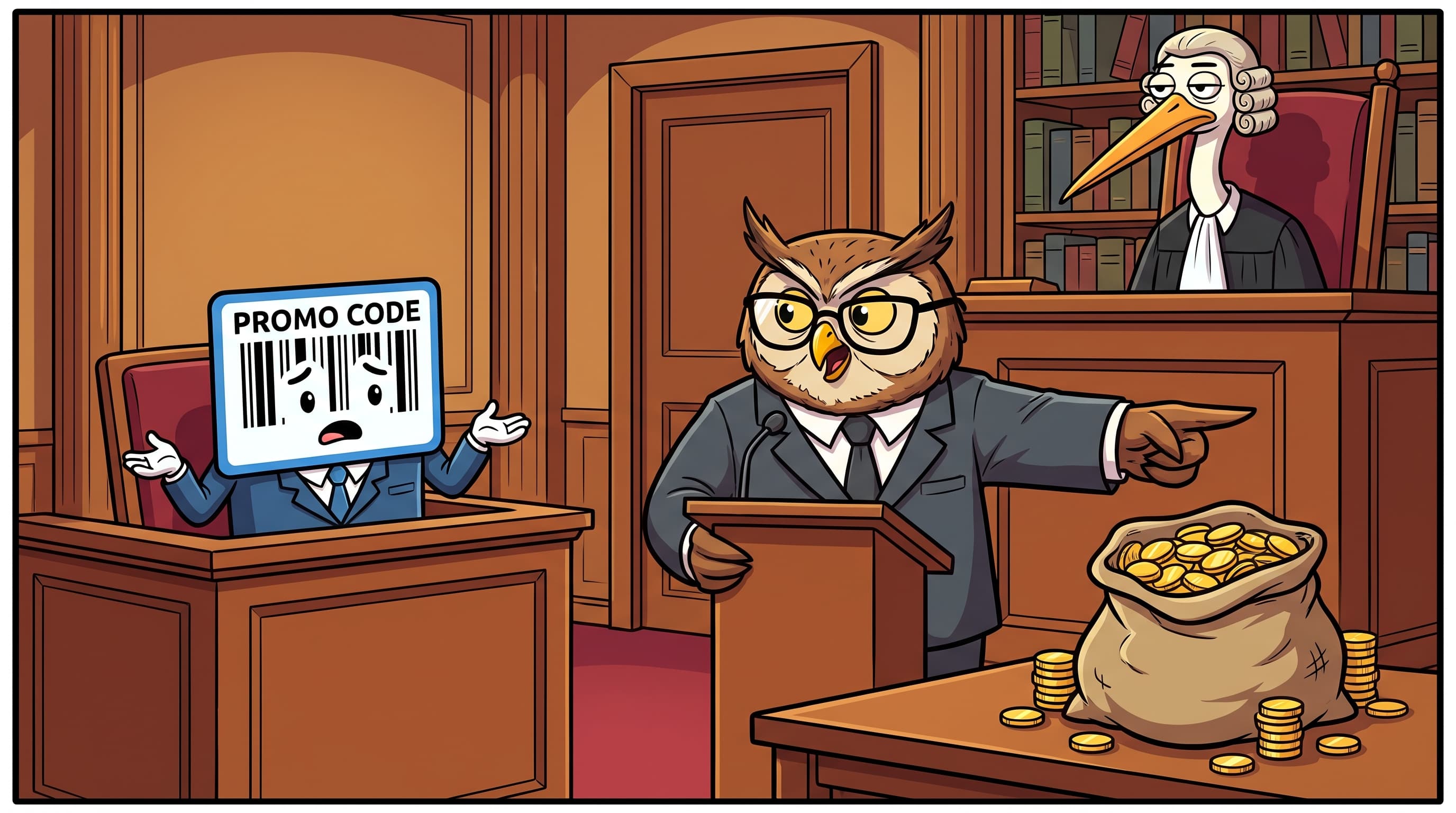
When a coupon aggregator picks up a creator's code and drives 200 orders in a week that normally sees 20, the brand overpays for sales it did not earn and its ROAS looks inflated. No automated system catches that leak for you, so the brand has to watch for it. True Margin advises monitoring Honey and RetailMeNot for your codes, rotating the code and issuing a new one to the influencer if it leaks, and adding a minimum order value to limit abuse.
Your promo code terms belong in the creator's contract. The contract should name the code and the attribution window. Polar Analytics argues for a fixed window stated up front, seven days from click for impulse categories and thirty for considered ones, plus a rule that one order maps to exactly one creator using a set precedence.
A brand paying twenty creators across five currencies by wire transfer keeps a finance person busy and still misses the per-conversion bonus triggers written into each deal. On UGCBloom, the brand funds the campaign once and the platform pays every creator from that balance in the creator's own local currency the moment the campaign's rate trigger fires, while each creator's unique promo code, tracked through the Stripe connection and the UGCBloom pixel, supplies the per-creator ROI the payout is based on.
Pull your Shopify discount report for last month. If matching every code to a creator and a payout takes longer than the five minutes a finance lead expects, the gap between what you pay and what you earn is already wider than your margin. Fix the mapping before you add the next creator.